Salad Greens Clipart: A Comprehensive Guide to Digital Botanical Assets
In the realm of digital design and creative projects, the demand for high-quality, versatile visual assets continues to grow. Among these resources, Salad Greens Clipart has emerged as a valuable tool for designers, hobbyists, and content creators alike. This collection typically features detailed illustrations of various leafy vegetables and herbs, offering a fresh, organic aesthetic that can enhance a wide range of materials. Understanding what constitutes this specific type of clipart, its technical specifications, and its practical applications is essential for determining whether it aligns with your current project needs.
Understanding the Composition of Salad Greens Clipart
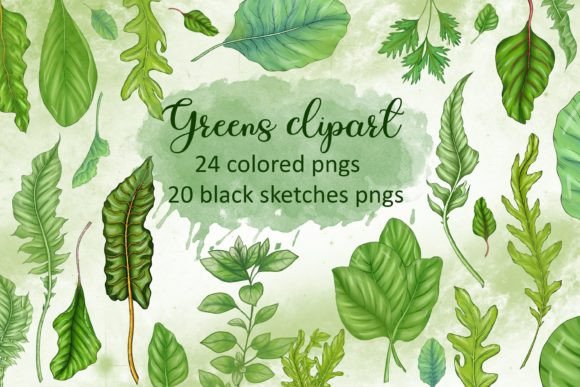
At its core, Salad Greens Clipart refers to a curated set of digital images depicting edible leaves and herbs. A robust collection often includes a diverse array of botanical subjects. For instance, a comprehensive package may feature twenty-four colored elements representing popular salad ingredients such as arugula, wild chicory, mangold, spinach, kale, parsley, and oregano. These colored illustrations are designed to capture the natural vibrancy and texture of fresh produce, providing a realistic yet stylized representation suitable for various design contexts.
In addition to colored versions, many premium collections include black sketches or line art variants. These monochrome options, often numbering around twenty distinct sketches, offer flexibility for different artistic styles. The inclusion of both full-color and sketch formats allows users to choose the visual tone that best suits their project, whether they require a lively, colorful presentation or a minimalist, elegant outline.
Technical Specifications and Quality Considerations
When evaluating digital assets, technical quality is paramount. High-resolution Salad Greens Clipart is typically delivered in PNG format, which supports transparency. This feature is crucial for seamless integration into existing designs, as it allows the images to be layered over backgrounds without unsightly white boxes or jagged edges. The standard resolution for professional-grade clipart is often around 2400x2400 pixels at 400 DPI (dots per inch) in RGB color mode.
The significance of these specifications cannot be overstated. A resolution of 400 DPI ensures that the images remain crisp and clear even when printed at larger sizes. This makes them suitable for high-quality print materials such as posters, flyers, and greeting cards. Meanwhile, the RGB color space ensures accurate color reproduction on digital screens, making these assets equally effective for web design, social media graphics, and digital presentations. The approximate size of 2400 pixels provides ample room for scaling down without losing detail, though upscaling beyond the original dimensions may result in pixelation.
Practical Applications and Use Cases
The versatility of Salad Greens Clipart makes it applicable to a broad spectrum of creative endeavors. One of the primary uses is in paper crafts and stationery design. The lovely colors and organic shapes are ideal for creating unique and elegant paper decorations, invitations, and birthday projects. Designers often incorporate these elements into scrapbooking layouts, where the natural themes complement personal memories and photo overlays.
Beyond personal crafts, these assets are highly relevant for commercial and professional design work. For example, restaurants, cafes, and health food brands may utilize these illustrations in their marketing materials, such as menus, flyers, and promotional posters. The realistic depiction of ingredients like kale, spinach, and arugula can help convey freshness and quality to potential customers. Additionally, the black sketch variants are particularly useful for coloring books, educational materials, and minimalist branding projects where a subdued aesthetic is preferred.
Digital applications are equally diverse. Web designers can use these PNG files to add visual interest to blogs, websites, and online stores selling organic or health-related products. Planners and bullet journal enthusiasts often appreciate the ease with which these elements can be integrated into digital planning templates, adding a touch of nature-inspired elegance to daily schedules and goal-setting pages.
Benefits and Tradeoffs
Utilizing pre-made Salad Greens Clipart offers several distinct advantages. The most significant benefit is time efficiency. Creating detailed botanical illustrations from scratch requires specialized artistic skills and a considerable investment of time. By using ready-made assets, designers can accelerate their workflow and focus on other aspects of their projects, such as layout and typography. Furthermore, the consistency in style across a collected set ensures a cohesive look, which can be challenging to achieve when sourcing individual images from different artists.
However, there are tradeoffs to consider. While high-quality clipart is versatile, it may not offer the same level of customization as a bespoke illustration. Designers seeking highly specific variations or unique artistic interpretations may find pre-made sets limiting. Additionally, because these assets are available to multiple users, there is a risk of encountering similar designs in other projects, potentially reducing the uniqueness of one’s work. To mitigate this, users can combine different elements, adjust colors, or integrate the clipart with other design components to create a more distinctive final product.
Decision-Making Insights: Is This Right for You?
Determining whether Salad Greens Clipart is the right choice for your project involves assessing your specific goals and constraints. If you are working on a project with a tight deadline or limited budget for custom illustration, investing in a high-quality clipart set is a pragmatic decision. The inclusion of both colored and sketch formats adds value by providing flexibility for different mediums, from digital screens to print.
Consider the technical requirements of your intended output. If you plan to print large-format materials, ensure that the clipart’s resolution (e.g., 400 DPI) meets your printer’s specifications. For digital-only projects, the RGB format and transparent backgrounds will facilitate easy editing and integration. If your project requires extensive modification or unique artistic flair, you may need to supplement the clipart with additional design elements or consider commissioning custom artwork.
Ultimately, Salad Greens Clipart serves as a powerful resource for enhancing visual communication with a natural, fresh aesthetic. By understanding its features, limitations, and potential applications, you can make an informed decision about incorporating these assets into your creative toolkit. Whether for personal hobbies or professional design tasks, these digital elements offer a convenient and effective way to bring the beauty of botanicals into your work.