Elevating Visual Serenity: The Art and Utility of Watercolor Yoga Meditation Zen Clipart
In the rapidly expanding wellness industry, visual communication plays a pivotal role in establishing trust and conveying atmosphere. For yoga instructors, studio owners, and holistic health practitioners, the aesthetic of their brand is not merely decorative; it is an extension of the calming experience they promise to their clients. This is where specialized digital assets, such as Watercolor Yoga Meditation Zen Clipart, become indispensable tools. Unlike generic stock photography or rigid vector graphics, hand-painted watercolor elements offer a softness and organic quality that resonates deeply with the principles of mindfulness and relaxation.
The integration of high-quality, hand-painted imagery into professional design workflows allows creators to bridge the gap between artistic expression and commercial utility. By utilizing a curated set of thirteen high-quality images, designers can craft cohesive visual narratives that speak directly to the soul of their audience. These elements are not just pictures; they are building blocks for a serene brand identity.
The Aesthetic Power of Hand-Painted Digital Assets
The choice of medium in digital design significantly influences emotional response. Watercolor, with its fluid boundaries, subtle gradients, and translucent layers, mimics the natural world in a way that sharp, computer-generated lines often fail to capture. When applied to themes of yoga and meditation, this artistic style reinforces concepts of flow, balance, and gentle movement. The Watercolor Yoga Relax Time Clipart set exemplifies this synergy, offering images that feel breathable and alive.
Each element in this collection, from the serene Buddha statue to the delicate lotus flowers, is rendered with attention to texture and light. The use of 300 DPI (dots per inch) resolution ensures that these textures remain crisp and detailed, whether viewed on a high-resolution smartphone screen or printed on large-format banners. The transparent background feature of these PNG files is particularly crucial, allowing designers to layer these organic shapes over various backgrounds without the awkward white boxes that plague lower-quality clipart. This flexibility is essential for maintaining a professional, polished look across diverse media platforms.
Core Elements and Symbolic Resonance
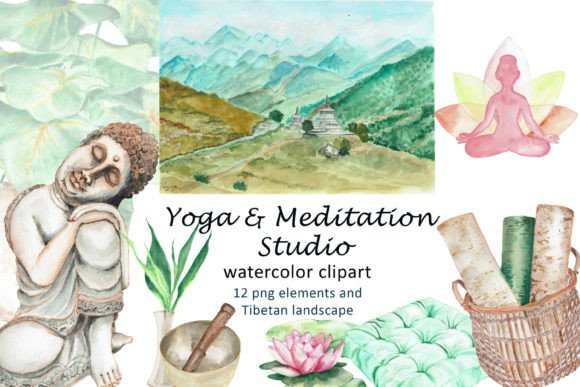
A successful wellness brand relies on consistent symbolism. The thirteen elements included in this specific collection are carefully selected to represent the holistic nature of yoga and meditation practices. Understanding the symbolic weight of each component helps designers use them more effectively.
- Buddha Statue: Represents enlightenment, peace, and the historical roots of meditation practices. It serves as a focal point for designs centered on spiritual growth.
- Tropical Home Plants and Bamboo: These elements connect the indoor practice to the natural world, emphasizing grounding and environmental harmony.
- Lotus Flower: A universal symbol of purity and rebirth, rising cleanly from muddy waters, perfect for messaging around transformation and clarity.
- Meditation Accessories: Items such as pillows, bowls, candles, diffusers, and mats provide context. They signal to the viewer that this is a space for rest, sensory engagement, and physical comfort.
- Tibetan Landscape: The bonus landscape image offers a broader contextual backdrop, evoking the majestic tranquility of traditional retreat locations.
By combining these elements, creators can construct scenes that tell a complete story. For instance, placing a lit candle next to a diffuser and a rolled mat suggests a ready-to-use sanctuary, inviting the viewer to step into that space mentally and emotionally.
Practical Applications for Business and Creativity
The versatility of Watercolor Yoga Meditation Zen Clipart extends far beyond simple website decoration. For small business owners and independent creators, these assets are foundational tools for marketing and branding. The high resolution and transparent backgrounds make them suitable for both digital and print applications, ensuring brand consistency across all touchpoints.
Branding and Identity Design
For new yoga studios or wellness coaches, establishing a logo and visual identity is the first step in building a client base. The inclusion of a bonus logo element provides a starting point, but the individual components allow for custom logo creation. A designer might combine a lotus with a bamboo stalk to create a unique monogram. These same elements can be scaled down for business cards or visit cards, ensuring that the brand’s serene aesthetic is present in every physical interaction with a potential client.
Marketing Materials and Promotions
Effective marketing in the wellness sector requires materials that stand out while remaining soothing. Invitation cards for workshops, retreats, or special classes benefit immensely from the hand-painted look. Unlike stark corporate flyers, invitations featuring watercolor elements feel personal and welcoming. Similarly, social media posts, which require constant fresh content, can be easily assembled using these clips. A simple quote about mindfulness placed over a soft watercolor background of a Tibetan landscape can generate significant engagement on platforms like Instagram and Pinterest.
Product Design and Packaging
The application of these images extends into physical product design. Textile designers can use the seamless nature of watercolor patterns to create prints for yoga mats, towels, or apparel. The organic shapes translate well to fabric, adding a touch of elegance to functional items. Furthermore, packaging for wellness products—such as essential oils, herbal teas, or meditation cushions—can be elevated with these labels and stickers. The tactile quality implied by the watercolor texture enhances the perceived value of the product, suggesting artisanal quality and care.
Technical Considerations for Optimal Use
To maximize the potential of these digital assets, users must understand the technical specifications provided. The files are delivered as RGB PNGs at 300 DPI. RGB (Red, Green, Blue) is the color model used for digital screens, making these files ideal for web design, social media, and digital advertising. However, for print projects like banners, brochures, or packaging, it is important to note that professional printers often prefer CMYK color profiles. While modern printers can handle RGB files, converting them to CMYK before printing can ensure color accuracy, particularly for the subtle pastel tones typical of watercolor art.
The transparent background is another critical technical feature. It allows for non-destructive editing. Designers can place a watercolor candle over a photo of a room, and it will blend naturally rather than appearing as a cut-out sticker. This capability is essential for creating mood boards and complex composite images used in web design and advertising campaigns.
Enhancing User Experience in Digital Spaces
In web design, the goal is to keep visitors engaged and comfortable. Cluttered or aggressive visuals can drive users away, especially in the wellness niche. Using Watercolor Yoga Relax Time Clipart helps create a user interface that feels open and airy. These elements can be used as section dividers, background accents, or icons for navigation menus. For example, a small lotus icon could indicate a "Meditation" page, while a bamboo graphic might mark a "Yoga Classes" section. This subtle visual cueing improves usability and reinforces the thematic consistency of the website.
Moreover, the loading speed of websites is crucial. PNG files, while high quality, can be optimized for web use to ensure they do not slow down page load times. Balancing visual fidelity with performance is a key consideration for web developers integrating these assets.
Supporting Educational and Therapeutic Content
Educators and therapists also find value in these visual tools. Instructors creating course materials, worksheets, or presentation slides can use these images to break up text and illustrate concepts. A diagram explaining breathing techniques might include a watercolor illustration of a person in a meditative pose, making the instruction more approachable and less clinical. Similarly, art therapists might use these digital stamps in scrapbooking projects or digital journaling templates, providing clients with pre-made, aesthetically pleasing elements to facilitate creative expression without the pressure of drawing from scratch.
The inclusion of a Tibetan landscape offers a powerful tool for guided visualization exercises. Displaying this image during a session or including it in a downloadable audio-visual guide can help participants anchor their minds in a peaceful setting, enhancing the effectiveness of the therapeutic practice.
Conclusion: Investing in Visual Harmony
The decision to use specialized clipart like the Watercolor Yoga Meditation Zen Clipart set is an investment in the quality and coherence of a brand’s visual language. In a market saturated with generic imagery, the distinctiveness of hand-painted watercolor elements provides a competitive edge. They offer the flexibility needed for diverse applications—from digital social media campaigns to tangible product packaging—while maintaining the emotional resonance required in the wellness industry.
By understanding the symbolic meaning of each element and adhering to best practices for digital and print usage, creators can unlock the full potential of these assets. Whether designing a logo for a new studio, creating inviting workshop invitations, or enhancing a website’s user experience, these thirteen high-quality images serve as versatile foundations for building a brand that truly embodies peace, balance, and zen.